Credit Risk Tool
Accurate credit ratings, bankruptcy risk estimates, and credit risk reports for 400,000+ Danish companies. Powered by XGBoost machine-learning models.
Report information
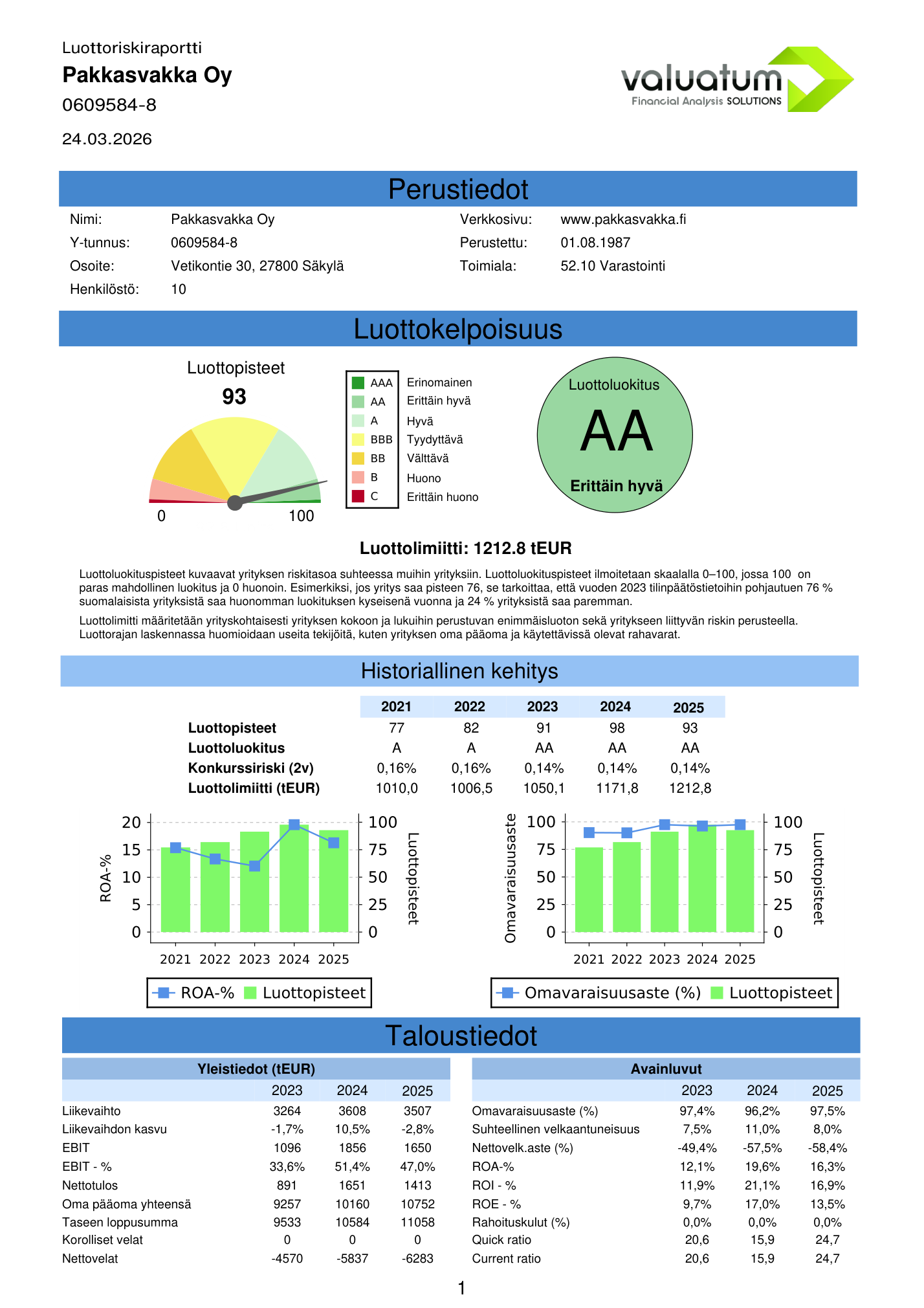
What the credit risk report includes
Credit Score
A numerical score (0–100) presented as a percentile: a score of 78 means lower risk than 78% of Danish companies that year. Up to five years of history.
Credit Rating
Letter-grade rating (AAA to C) calibrated so roughly one-third of companies fall into "A" categories — consistent with Standard & Poor's distribution methodology.
Bankruptcy Risk
The probability of the company going bankrupt during the next two years, calculated using XGBoost machine-learning trained on historical bankruptcy data.
Credit Limit Suggestion
A suggested maximum credit limit based on gross profit, equity, liquid assets, and bankruptcy risk. Calculated algorithmically as a preliminary estimate for lending decisions.
Industry Comparison
Charts and tables comparing the company's key figures and credit score against industry averages and peers — to contextualize the credit risk assessment.
Financial Statements
Income statements and balance sheets from official Danish filings for up to five financial years, with automatically calculated key ratios.
Key Financial Ratios
Profitability, solvency, liquidity, and efficiency ratios automatically calculated from financial statements, with year-on-year trend indicators.
Company Overview
Legal name, CVR, industry classification, founding year, registered address, and other basic company information from the Danish Central Business Register.
Platform features
Beyond the report: the analysis platform
CreditReports.dk Platform comes with modern features including automated forecasts, editable financial models, and extensive credit risk analysis tools.
Current limitations
Payment behavior
Payment behavior data (invoice payment delays) is not currently included in the models. This data would improve early-warning signals when available.
IFRS companies
Companies filing under the IFRS accounting standard have limited ratio coverage on the platform.
Assessment scope
Reports focus on medium-term (1–2 years) creditworthiness and are intended to support credit decisions, not replace comprehensive due diligence.